
What Is the Holy Grail of Cigars?
The "holy grail of cigars" is a phrase cigar enthusiasts use for the rarest, hardest-to-find stick a smoker could chase — usually a discontinued blend, a limited production run that sold out years ago, or a box that's been aging in someone's humidor long enough that almost none of it is left anywhere.
There's no single cigar that holds the title. It's not a product name, it's a category. What one collector calls their holy grail — a specific vintage, a specific wrapper, a specific factory run — means nothing to someone with different taste. The term describes the hunt, not a fixed destination.
It's also worth separating the phrase from simple scarcity. A cigar can be hard to find without being anyone's holy grail, and a widely available cigar can become one the moment the maker stops producing it and a smoker realizes their last few sticks are the last they'll ever have. Status isn't fixed to the cigar — it's assigned by the person chasing it.
What Actually Makes a Cigar Earn That Status
A few things tend to show up whenever cigar smokers use the phrase seriously.
Rarity is the biggest one. A cigar made in small batches, or made once and never repeated, becomes harder to find the longer it's been off the market. Discontinued blends fall into this bucket too — once a maker stops producing a line, whatever's left in circulation is all that will ever exist.
Age matters as well. Tobacco changes in the box over years, and a cigar that's been resting since it was rolled smokes differently than one bought fresh. Some of what collectors chase is specifically older stock, not a different blend at all.
Wrapper scarcity plays a role too. Certain wrapper leaves are harder to grow, harder to source, or produced in smaller volume in a given year, which limits how many cigars can be made with them regardless of demand.
Rare vs. "Limited Edition": Why the Label Alone Isn't Enough
Not everything marketed as "limited" is actually rare, and it's a distinction worth understanding before you start chasing anything. A limited edition simply means a maker set a production number or a release window in advance — it tells you nothing about whether that number was small relative to demand, or whether the blend will ever be made again.
True scarcity works differently. It happens when a blend is discontinued outright, when the tobacco used in it can't be sourced again in the same quantity or quality, or when a production run was genuinely small to begin with — limited by how much of a particular leaf or vintage existed, not capped as a marketing decision.
The practical test is simple: ask whether the cigar could be made again if the maker wanted to. If the answer is yes, it's limited in name only. If the leaf, the blend, or the circumstances that produced it can't be repeated, that's closer to what collectors actually mean when they reach for the term holy grail.
A Simple Example of How a Cigar Earns the Title
Here's a general illustration of how that plays out, without pointing to any specific blend. Picture a cigar released in modest numbers, well-reviewed at the time, then discontinued a few years later when the wrapper crop it depended on stopped being available in the same form. At launch, nobody necessarily considered it special — it was just another release among many. A handful of smokers bought boxes and let them sit in a humidor rather than smoking through them right away.
Years on, the blend can't be reordered, the wrapper no longer exists in that form, and the only examples left are whatever individual smokers happened to hold onto. At that point the cigar has quietly become somebody's holy grail — not because of how it was marketed when it launched, but because of what happened to it afterward. Time and discontinuation usually do more of the work than any original marketing claim ever could.
Why the Answer Is Personal, Not Universal
Ask five experienced smokers what their holy grail is and you'll likely get five different answers, because the term is really about chasing the flavor profile you personally love most — not a universally agreed-upon list of rare cigars. That's exactly why finding someone else's holy grail rarely satisfies the way finding your own does.
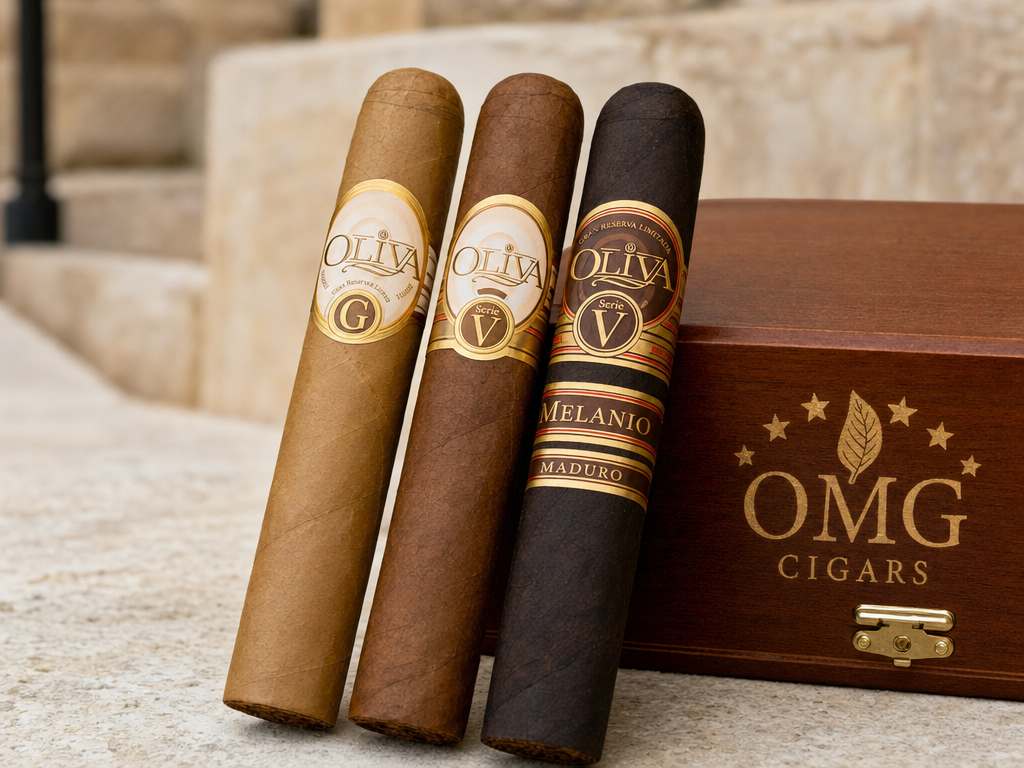
That search starts with wrapper type, since wrapper leaf drives most of what you taste first. Connecticut shade wrappers tend toward mild, creamy, and smooth — a style we cover in our guide to the best Connecticut cigars. Maduro wrappers go the other direction: darker, sweeter, and bolder, which we walk through in our Maduro cigar guide. Habano wrappers sit somewhere in between for many smokers, often with more spice and complexity, covered in our Habano cigar guide.
If you don't know which direction your own holy grail lies, working through wrapper types in that order — mild, complex, bold — is a reasonable way to find out.
How a Boutique Maker Fits Into This
OMG Cigars is a boutique premium cigar manufacturer, and boutique makers tend to operate differently from large commercial producers — smaller runs, closer attention to individual blends, and more direct involvement in the industry events where new releases and rare tobacco get discussed. We attended PCA 2026 in New Orleans, the trade show where much of the premium cigar industry gathers each year.
Smaller operations also tend to retire blends more readily than large commercial producers, simply because a shift in available leaf or a change in focus affects a bigger share of what they make overall. That's part of why boutique-made cigars show up disproportionately in conversations about scarce or discontinued sticks — not because they're built to be rare on purpose, but because there's less buffer between a single blend and the maker's total output.
We won't tell you any single OMG cigar is the holy grail — that's a title a smoker decides for themselves, not one a maker can claim. What we can do is point you toward the wrapper styles most likely to match what you're after, and let your own palate make the call from there.
Finding Your Own Holy Grail Cigar
Start by smoking across wrapper types rather than sticking to one. Keep notes on what you actually enjoyed — not just "good" or "bad," but what specifically stood out: sweetness, spice, strength, finish.
Once you know your general direction, pay attention to production details: is the blend a regular release or a limited run? Has it been discontinued? Those details tell you whether you're looking at something you can reliably find again or something you should buy when you see it.
A couple of practical habits make the search easier. Note the vitola — the cigar's size and shape — alongside the wrapper, since the same blend can smoke differently in a robusto than in a toro. If a retailer or the maker lists a box code or release date, write it down; it's often the only way to tell one production run from another years later.
When you do find something that might be it, resist smoking through the whole box right away. Set aside a few to smoke now so you know what you've got, and let the rest age if it's a blend that benefits from time in the humidor. That way, if the cigar turns out to be as good as you hoped and later becomes harder to find, you haven't smoked through the only evidence of why you loved it.
Questions and answers
Is there one official holy grail cigar everyone agrees on?
No. It's a category, not a specific product — the term describes any cigar that's become extremely rare or sought-after, and which one qualifies depends on the smoker's own taste and what they've personally been chasing.
Do I need a rare or discontinued cigar to have a 'holy grail'?
Not necessarily. Some smokers use the term loosely for any cigar that became their personal favorite after trying many others. The strict definition involves rarity, but plenty of people use it simply to mean the cigar that best matches what they love.
What's the difference between a limited edition and a true holy grail cigar?
A limited edition just means a maker set a production cap or release window in advance — it doesn't guarantee the blend will never be made again. A cigar closer to true holy-grail territory is one that genuinely can't be remade, usually because it's been discontinued or the original tobacco is no longer available.
Should I smoke a rare cigar or save it?
There's no single right answer, but a reasonable approach is to smoke one or two from a small find so you actually know what you have, and let the rest age if the blend is one that improves with time. A cigar you never smoke can't tell you whether it was worth chasing in the first place.
If you're trying to figure out which direction your own holy grail lies, start with our wrapper guides and reach out to OMG Cigars directly with questions about current releases.